What is the difference between geogrid and geomembrane?
In the rapidly evolving landscape of civil engineering and environmental protection, geosynthetics have become the backbone of modern infrastructure. However, for many project managers and procurement officers, the terminology can be confusing. Geogrids and geomembranes are two of the most used yet completely dissimilar materials.
Certainly they are the same type of polymer, both belong to family called geosynthetics but in a project, their roles are almost opposite. The decision of which one to use—or even how they can be used together—is a very important factor for the future of your site.This article breaks down the four fundamental differences to help you select the right solution, whether you are building a road or an industrial hdpe geomembrane liner system.
1. Primary Function: Liquid Barrier vs. Structural Support
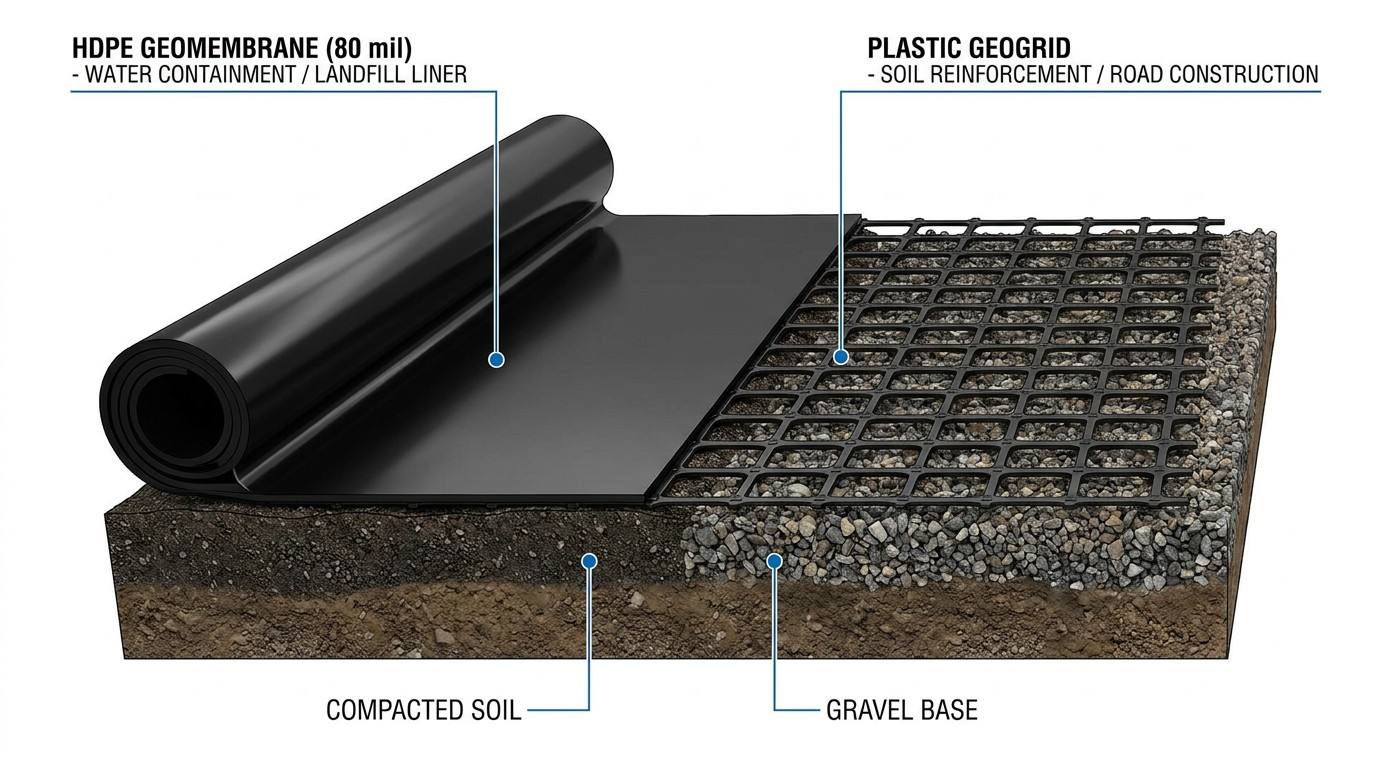
Whereas the big difference is in what these materials are made to do. Geomembrane is a "barrier," and geogrid is" reinforcement."
An hdpe geomembrane liner is designed to be entirely impermeable. It is intended to prevent the migration of fluids (water, leachate or hazardous chemicals) The hdpe geomembrane liner is the final safeguard for groundwater protection from a landfill or mining site.
Conversely, a geogrid is a substrate that more or less serves to stabilize the earth and is permeable. It is because it "locks" soil or aggregate particles inside its pores (apertures) rather than blocking liquid.While the hdpe geomembrane liner stops the flow, the geogrid supports the load.
2. Physical Structure: Solid Polymer Sheets vs. Open Mesh Grids
The physical appearance and manufacturing process of these two materials are distinct.
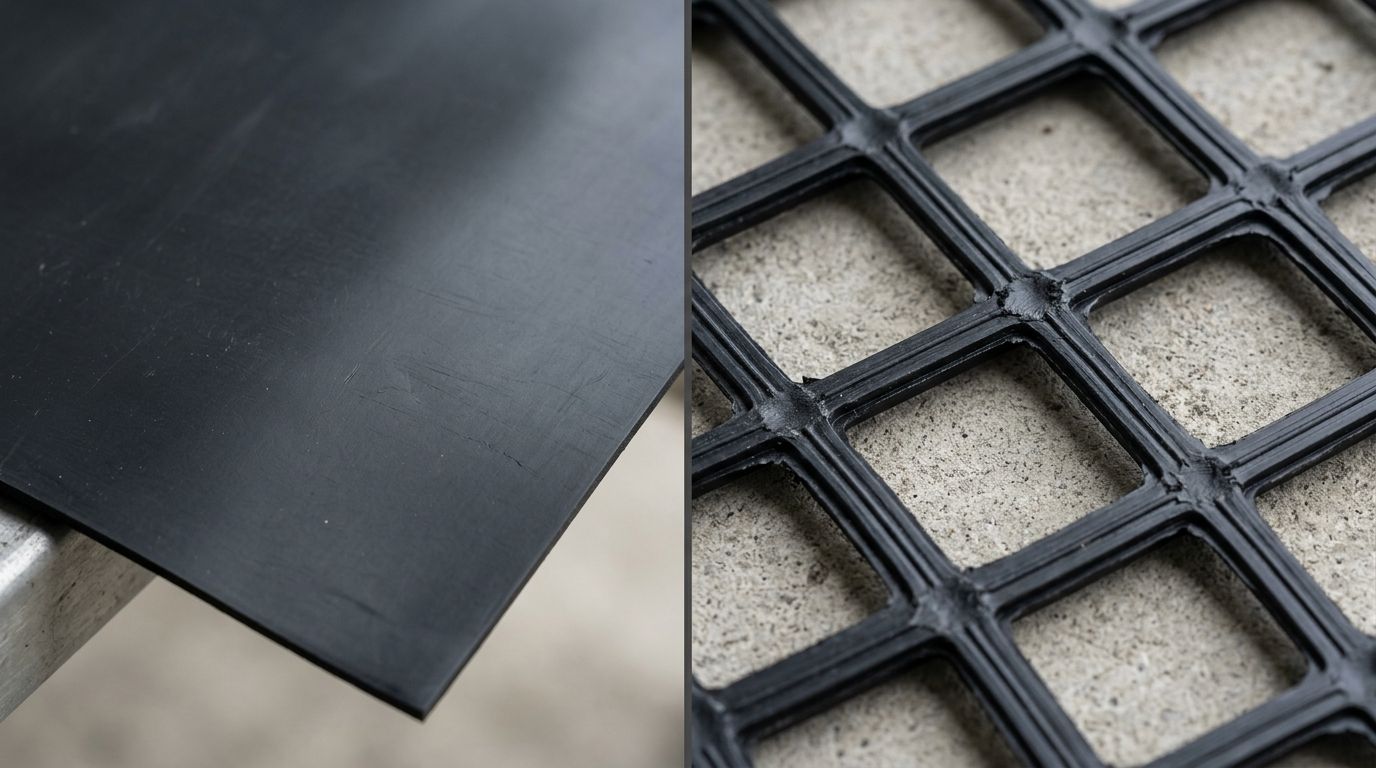
An HDPE geomembrane liner is a continuous layer of plastic without holes or structures. HDPE is usually extruded or produced by a blown-film approach to form a non-permeable barrier. Since it is a solid sheet, hdpe geomembrane liner has excellent chemical resistance and can hold millions of gallons of liquid without the colour seep.
On the other hand, a geogrid appears as a huge plastic net or mesh.It consists of a regular open network of integrally connected tensile elements (ribs) with large holes in between. These holes are essential because they allow soil to interlock with the grid.Unlike the unfilled lower half of this workhorse and the solid hdpe geomembrane liner, the geogrid is totally permeable, offering no hydraulic containment.
3. Key Applications: Environmental Containment vs. Soil Reinforcement
Due to their functions being completely different, they are used in distinct areas of a construction project.
List of common hdpe geomembrane liner applications:
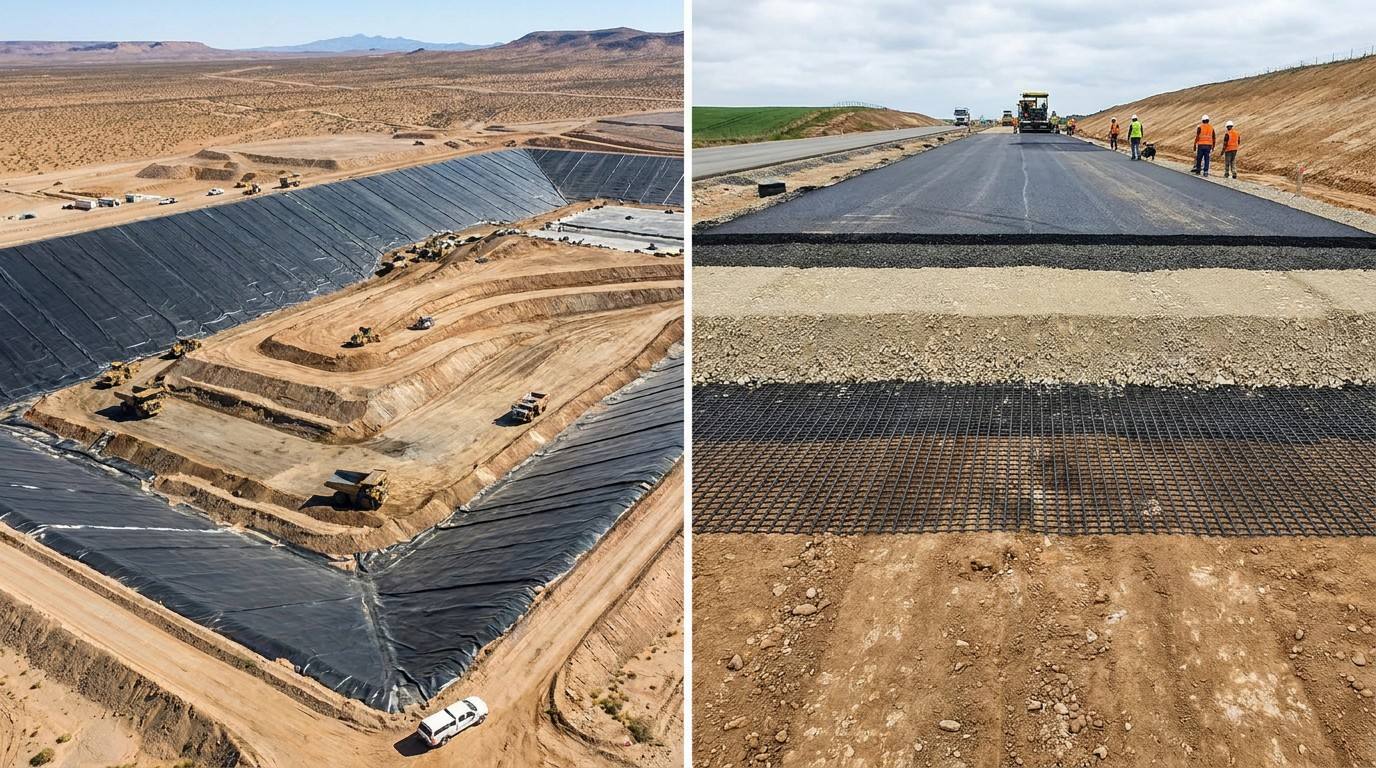
Landfills: For lining the base to prevent toxic leachate from reaching soil.
Mining — Used in heap leach pads to get gold or any other precious metal.
Aquaculture: To seal ponds for fish and shrimp in order to save water.
Secondary Containment: To contain oil or fuel leaks around storage tanks.
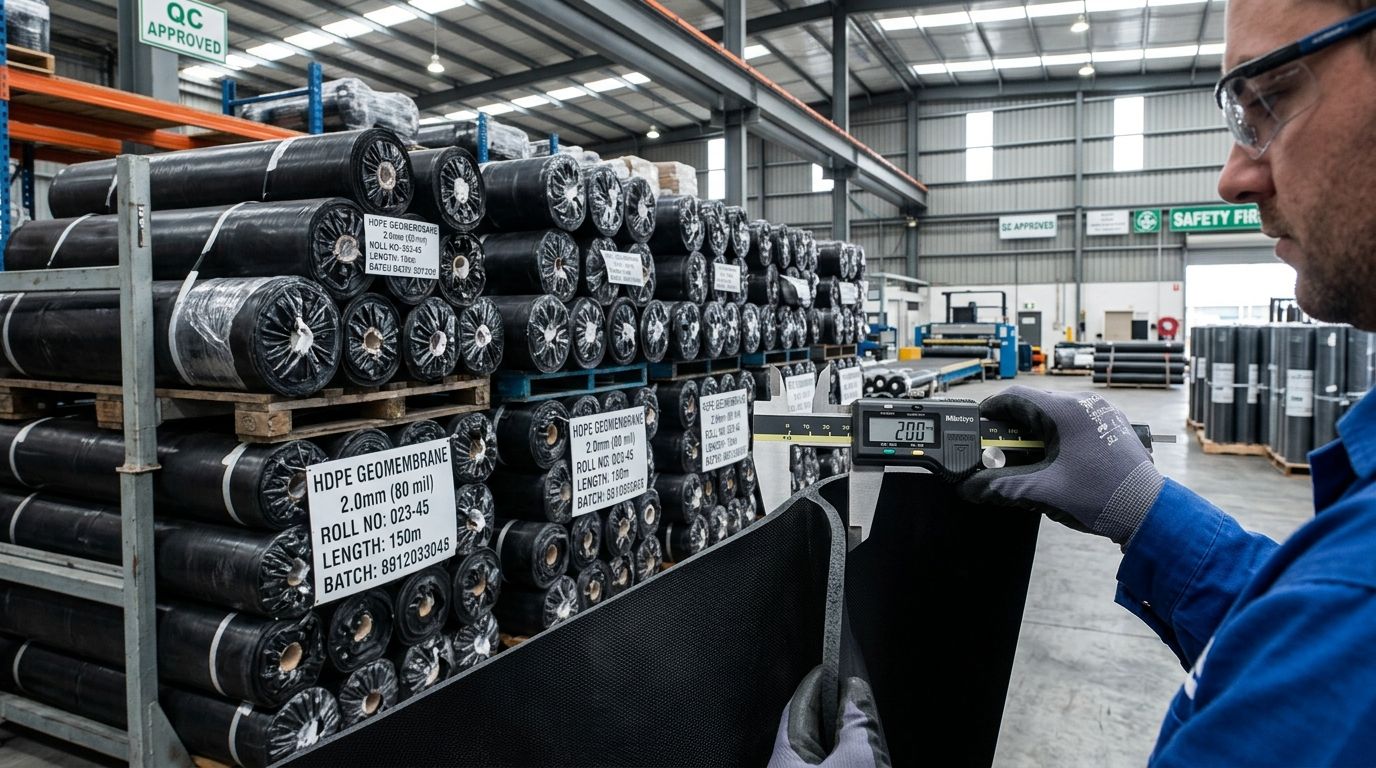
An heavy-duty 80 mil hdpe liner (2.0mm thick) is often specified by engineers for particularly critical industrial or municipal projects. The best available puncture resistance and durability is an 80 mil hdpe liner requiring less stress compared to hazardous waste cells.
Geogrids are most commonly used in:
Roads Construction: To strengthen substructure to avoid rut or crack.
Retaining Walls: To hold back massive soil loads and prevent wall failure.
Steep Slopes: To provide internal stability to embankments.
4. Procurement and Budgeting: Factors Affecting HDPE Liner Cost per M2
When planning your project budget, it is important to understand that the pricing models for these materials are very different. The hdpe liner cost per m2 is largely determined by the thickness of the material and the quality of the resin used.
For an hdpe geomembrane liner, the price per square meter will increase as the thickness goes from 20 mil to 40 mil, and eventually to an 80 mil hdpe liner. Other factors affecting the hdpe liner cost per m2 include the presence of UV stabilizers, the surface texture (smooth vs. textured), and global petroleum prices, as HDPE is a polymer-based product.
When searching for the best hdpe liner cost per m2, it is vital to balance the upfront investment with the long-term lifecycle of the project. A high-quality hdpe geomembrane liner made from 100% virgin resin may have a higher initial cost but will save millions in potential leak remediation and replacement costs later.
Conclusion: How They Work Together
This guide details the differences, but it is not uncommon to see these two materials working together. A geogrid is used for one type of stabilization on a steeper side slope in a complex landfill design, yet the primary containment barrier at the base still uses an hdpe geomembrane liner.
Seventh, in order to play a better role in your infrastructure projects, you should understand that the hdpe geomembrane liner is used for "sealing" and the geogrid is used for "strengthening."Whether you are calculating the hdpe liner cost per m2 for a pond or specifying an 80 mil hdpe liner for a mining site, choosing high-quality geosynthetics is the only way to ensure a safe and sustainable future.