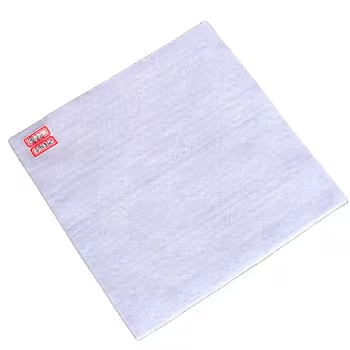
What are Geomembranes and Geotextiles for Earth Reinforcement?
Geotechnical engineering Stability of a structure is largely contingent upon its interaction with two elements; soil and water. Engineers have turned to geosynthetics over the decades as a potential solution to these problems. Geomembranes and geotextiles are among the two most vital materials in this line of work! They are often linked, but fulfil very different functions when it comes to earth reinforcement and environmental containment.
Knowledge about the purpose of an hdpe geomembrane sheet vs a permeable geotextile is critical for any professional who works in road construction, landfill or mining. In this guide, we will go over four key aspects of these materials and how they contribute to our modern infrastructure.
1.THE BARRIER: THE HDPE GEOMEMBRANE SHEET
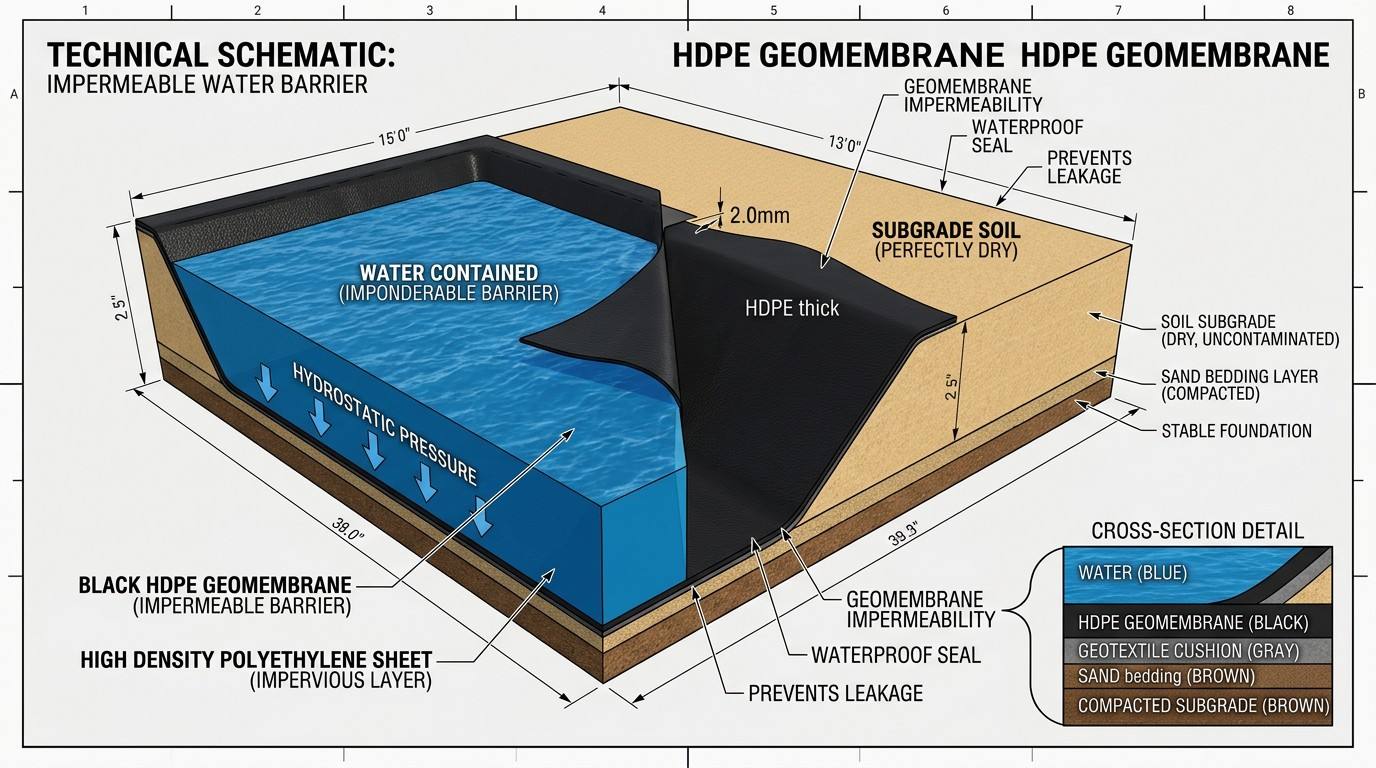
Earth reinforcement can be seen primarily with reference to "containment". This is where you hdpe geomembrane sheet comes in the picture. In contrast with the fabrics of water permeable barriers, the geomembrane sheet in hdpe is an impermeable compartment that prevents water and gases from escaping.
Moisture control is crucial in reinforcement projects. Overly saturated land may turn less solid, triggering landslides or the so-called liquefacement of soil. Using a good quality hdpe geomembrane sheet can be used by engineers to isolate the mass of soil from groundwater or rainwater, and ensure that the internal friction of the soil remains high. As a result, it is vital in constructing safe reservoirs, mining pads and hazardous waste containment cells with zero-seepage requirement.
2. Soil Stability vs. Fluid Control: Mechanisms of Reinforcement
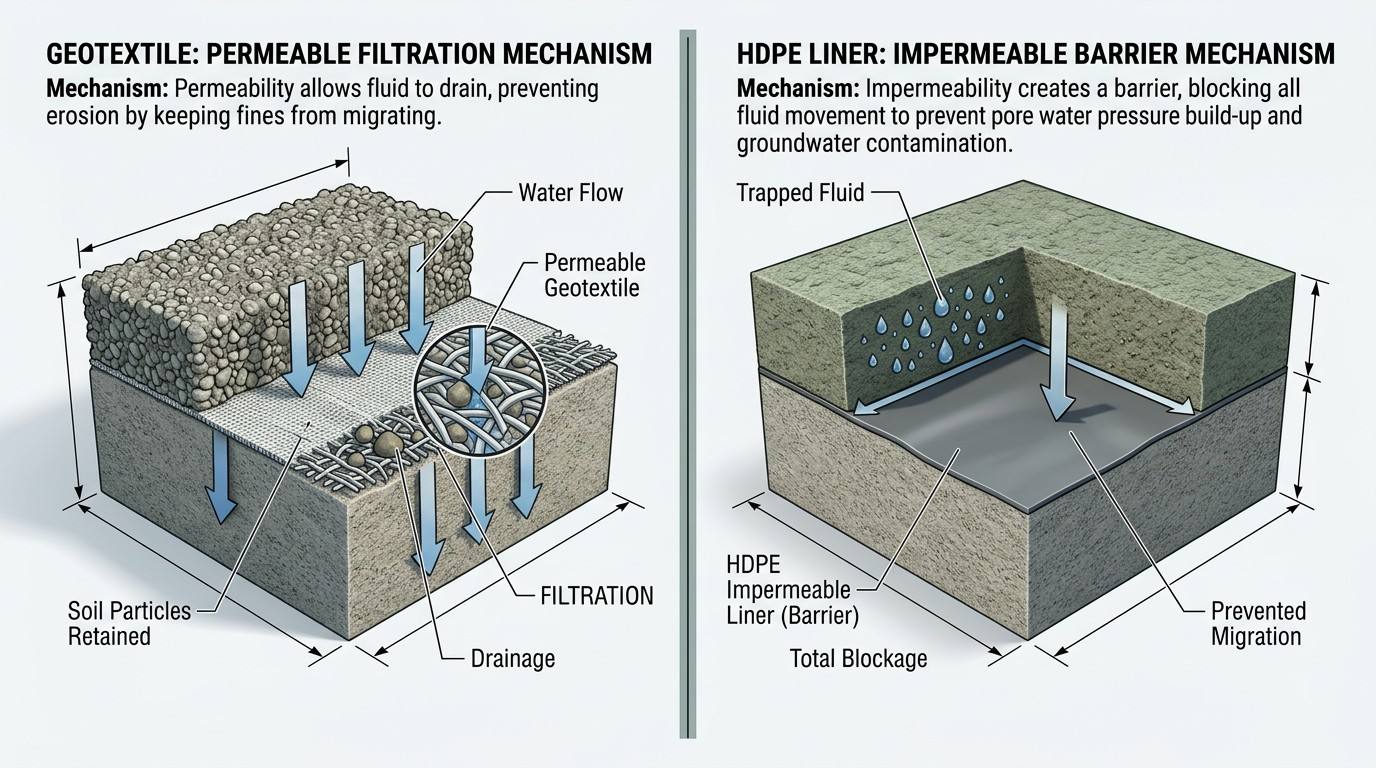
The answer to "what they are for" is a comparison between the new mechanical reinforcement that geotextiles provide, and hydraulic control of an hdpe impermeable liner.
Geotextiles: These include permeable fabrics (either woven or non woven) that are used for filtration, drainage and separation. They also add soil, spreading loads and preventing intermingling of soil layers.
HDPE Impermeable Liners: An hdpe impermeable liner focuses on the "protection" side of reinforcement. By preventing water from infiltrating a reinforced soil slope, the hdpe impermeable liner prevents the buildup of pore water pressure, which is a leading cause of slope failure.
The geotextile acts as the structural "skeleton",which in many complex projects is partnered by an hdpe geomembrane sheet which forms the outer skin that secures a dry system and none-leakage. However, even the strongest protected soil would be susceptible to failure over time due to internal erosion or water saturation without an hdpe impermeable liner.
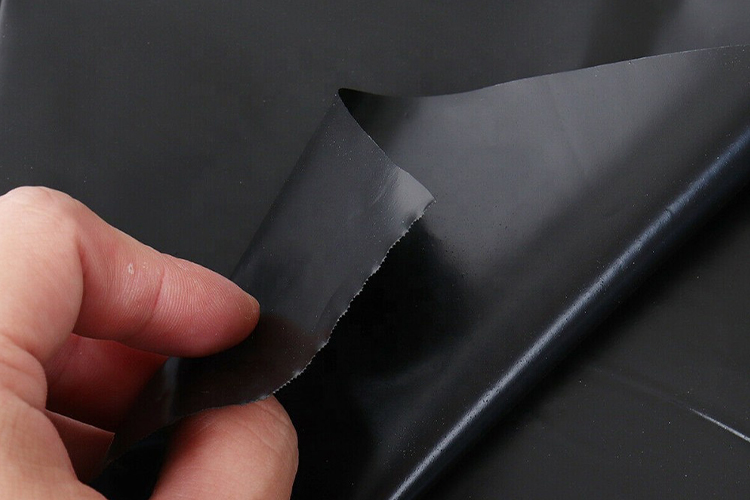
3.Engineering Standards: 1.5mm HDPE liner is Adopting n Industry Benchmark
When selecting materials for earth reinforcement, the thickness and density of the polymer are vital. For mid-to-high stress applications, the 1.5 mm hdpe liner (yes, 60 mil) is probably the default performance value winner.
Features of 1.5 mm hdpe liner are Generally useful for long term Project:
Puncture Resiliency: It is thick enough to endure the mechanical beating of heavy backfilling machinery and rocky subgrades.
Chemical resistance: Just like all high-density polyethylene products, a 1.5 mm hdpe liner can withstand pretty much any chemical, which makes it suitable for the industrial reinforcement job done well.
UV Resistance:Formulations of 1.5 mm hdpe liners are reinforced with carbon black and antioxidants, maintaining stability when exposed to the sun during construction.
This means when selecting a certified hdpe geomembrane sheet at 1.5mm that the whole reinforcement system will not suffer from microscopic tears or chemical breakdown for 50 to 100 years which is its expected lifespan.
4. Synergistic Applications: How They Work Together
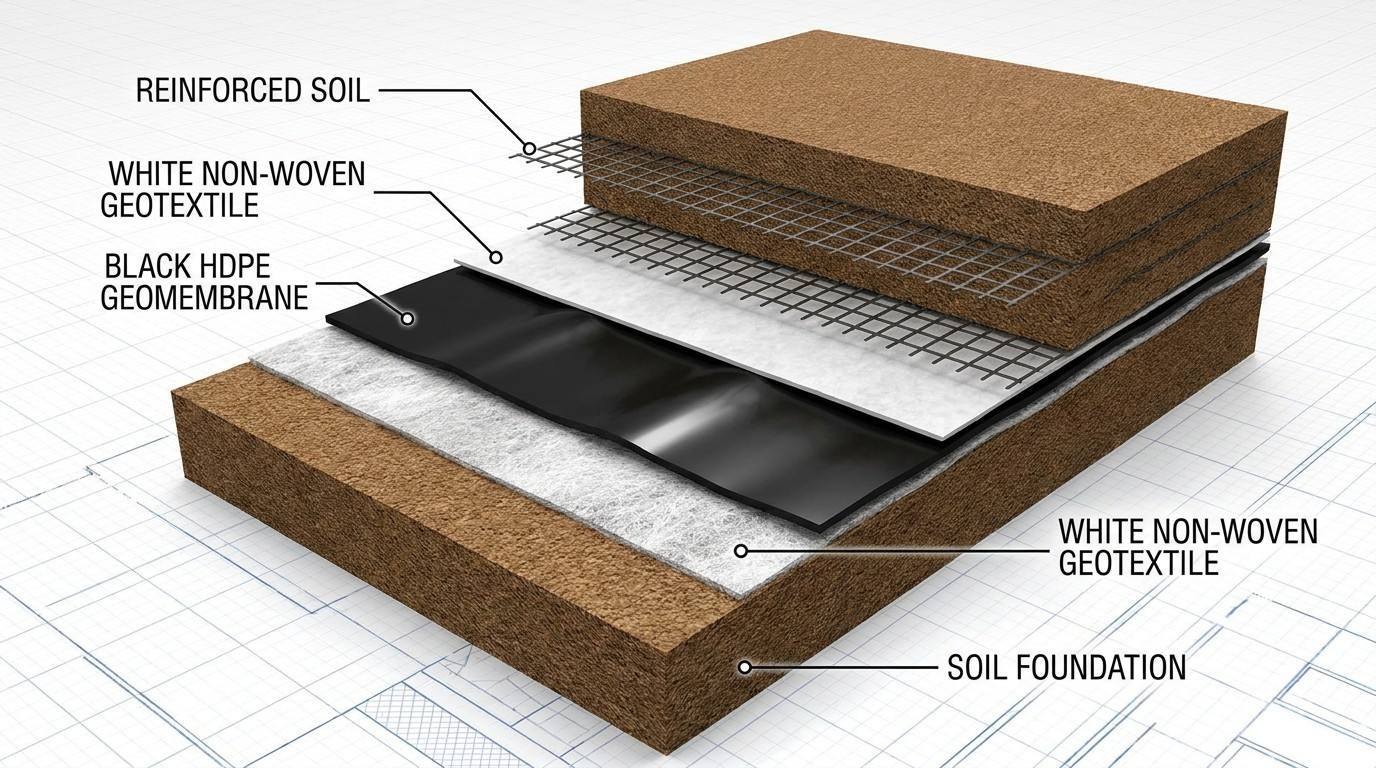
The most effective earth reinforcement systems are "composite" systems.What this means is that a tiered approach is utilized where they would use both geomembranes and geotextiles.
A contemporary landfill or "reinforced soil wall" will often be designed like this:
1.Separation: A geotextile placed in contact with the soil prevents fines from entering the drainage system.
2.Containment: The initial hdpe impermeable liner is an hdpe geomembrane sheet that keeps fluids separated.
3.Protection: A second non-woven geotextile is typically placed over the hdpe geomembrane sheet to serve as a cushion; protecting the plastic from being penetrated by the soil or aggregate layers above.
By virtue of the characteristics combining geotextiles tensile strength and absolute impermeability attributed to an hdpe geomembrane sheet, engineers can now construct taller walls, steeper slopes and safer containment facilities than at any time in the past.
Takeaway: Long-Term Investment in Structural Integrity
To review, the geotextiles provide the needed mechanical cohesion to keep the soil intact and then around that, to retain hydraulic control functions, we deposit an hdpe geomembrane sheet to ensure little risk of leachate or contamination into our water cycles or groundwater activities.
Whether you lodge a specification for 1.5 mm hdpe liner for a mining venture or use an hdpe impermeable liner for a municipal reservoir, the secret is how moisture handle and soil reinforcement are two sides of the same coin. With the right materials and strict adherence to installation best practices, your earth reinforcement project is designed for longevity.